
Choosing a Champagne Stopper Supplier: 7 Questions to Ask
· Stop Vine
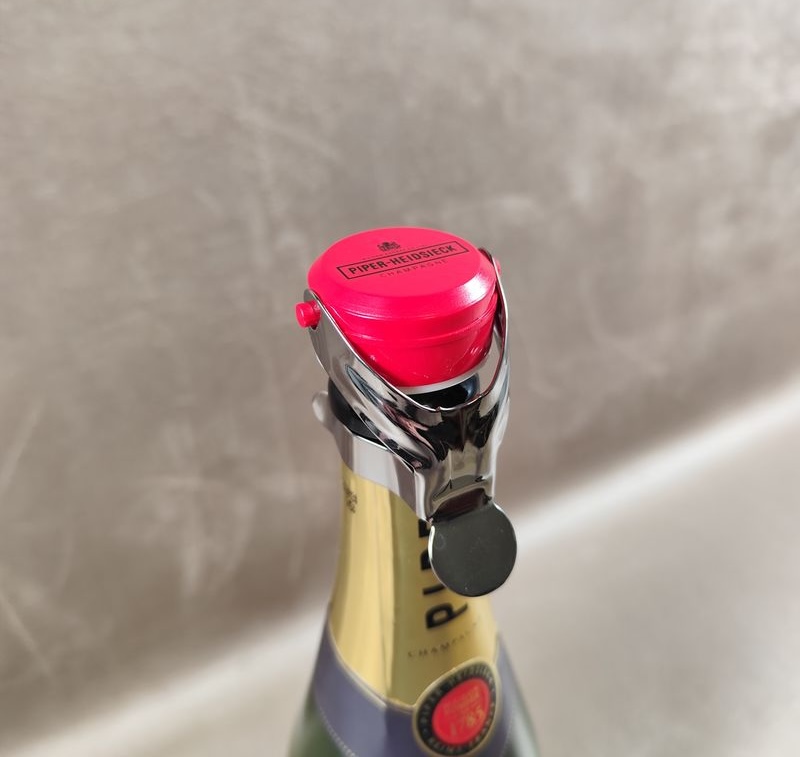
A custom champagne stopper is a small object, but it carries your name. It sits on your customer’s table, in their kitchen, on their opened bottle. The day it cracks, the logo fades, or the delivery lands three weeks after your trade fair, it is your brand that takes the hit.
Choosing a stopper supplier is therefore about far more than comparing prices. Here are the 7 questions to ask before you commit, and the answers that should make you walk away.
1. Does the stopper actually hold the pressure of a sparkling wine?
This is the elimination question. An opened bottle of champagne or sparkling wine keeps pushing: the dissolved carbon dioxide wants out, and only a stopper engineered for sparkling wine holds it back.
Many stoppers sold online are designed for still wine, or even for pure decoration. They seem to hold, then let the pressure slip away within hours. Ask explicitly whether the model is designed for sparkling wines and how its closure system maintains pressure. We covered the mechanics in detail in our article on keeping the bubbles after opening.
The answer that should worry you: a supplier who cannot explain how their stopper handles pressure has probably never tested it on a sparkling wine.
2. Is the material certified for food contact?
A stopper spends its life in contact with wine. The material must be certified for food contact under European standards, and ideally under US standards too if you export.
Do not settle for a “food grade” mention on a product sheet: ask for the certificates. A serious supplier hands them over without hesitation, because they already hold them for their own quality controls.
The answer that should worry you: “the material is food-safe” with no document to back it up.
3. What does the customization really cost?
This is where the unpleasant surprises hide. The unit price looks reasonable, then come the artwork fees, the machine setup fees, a surcharge per color, sometimes even a “file validation” fee.
Ask the question head-on: what is the total cost to get my stopper with my logo, artwork included? And ask to see the mockup before committing to anything. At Stop Vine, the artwork is free, precisely because this line item is so often used as a trap. To understand the marking techniques and how they affect the life of your logo, our custom champagne stopper guide covers the whole subject.
The answer that should worry you: a quote that does not itemize the customization line by line.
4. How do prices scale with volume?
A well-run supplier works with a clear volume-based price list: the more you order, the lower the unit price, and that list is set out in writing. Beware of “price on request” schemes that shift with every exchange.
Also compare against market rates: a custom sparkling wine stopper commonly retails at 3 to 4 euros apiece. If your volume price sits close to that figure, your resale margin or your client-gift budget evaporates. You can estimate your savings based on your annual volume directly with our simulator.
The answer that should worry you: no written price list, or an outsized minimum order for a first trial.
5. What are the real lead times, from artwork to delivery?
The lead time that matters is not the production time, it is the total time: artwork approval, manufacturing, marking, shipping, customs clearance where relevant. An honest supplier gives you that full duration and commits to it.
Plan around your peak moments: trade fairs, end-of-year holidays, wedding season. A custom stopper order is planned weeks ahead of the event, not the day before.
The answer that should worry you: lead times quoted “within two weeks” with no mention of shipping, or that double once the order is placed.
6. Does the supplier know the sparkling wine world?
There are two kinds of suppliers. The promotional-products generalist, who prints your logo on pens, tote bags and, incidentally, stoppers. And the specialist, who works only in wine and understands what a champagne bottle neck is, what 6 bar of pressure means, what serving by the glass involves.
The difference shows in the details: the shape of the stopper’s skirt, the insertion force, how the seal behaves over time. It also shows in the advice. A specialist can tell you when to use a stopper rather than a cork, and knows the working habits of your trade.
The answer that should worry you: a catalogue where the stopper sits next to keychains and umbrellas.
7. What do the producers already working with them say?
Last question, the simplest one: ask for references. Estates, houses, cooperative wineries already using the product, logo marked, across several seasons. Real-world feedback on how the marking and the stopper hold up over time is worth more than any sales pitch.
A supplier proud of their product puts their clients forward. A supplier with no references to show is asking you to be the first to take the risk.
The answer that should worry you: no verifiable reference in your industry.
In short
A good supplier is easy to spot: they explain the engineering without dodging, show their certificates before you insist, quote a total cost with no hidden fees, put their price list in writing, commit to a full lead time, live and breathe wine, and put their clients forward. A supplier who fails on two or three of these points will fail on your order too.
Seven questions, ten minutes of conversation, and you will know who you are trusting with your brand. If you want our answers to every one of them, let’s talk directly: the artwork is free, the price list is public, and our producer clients speak for themselves on our home page.